


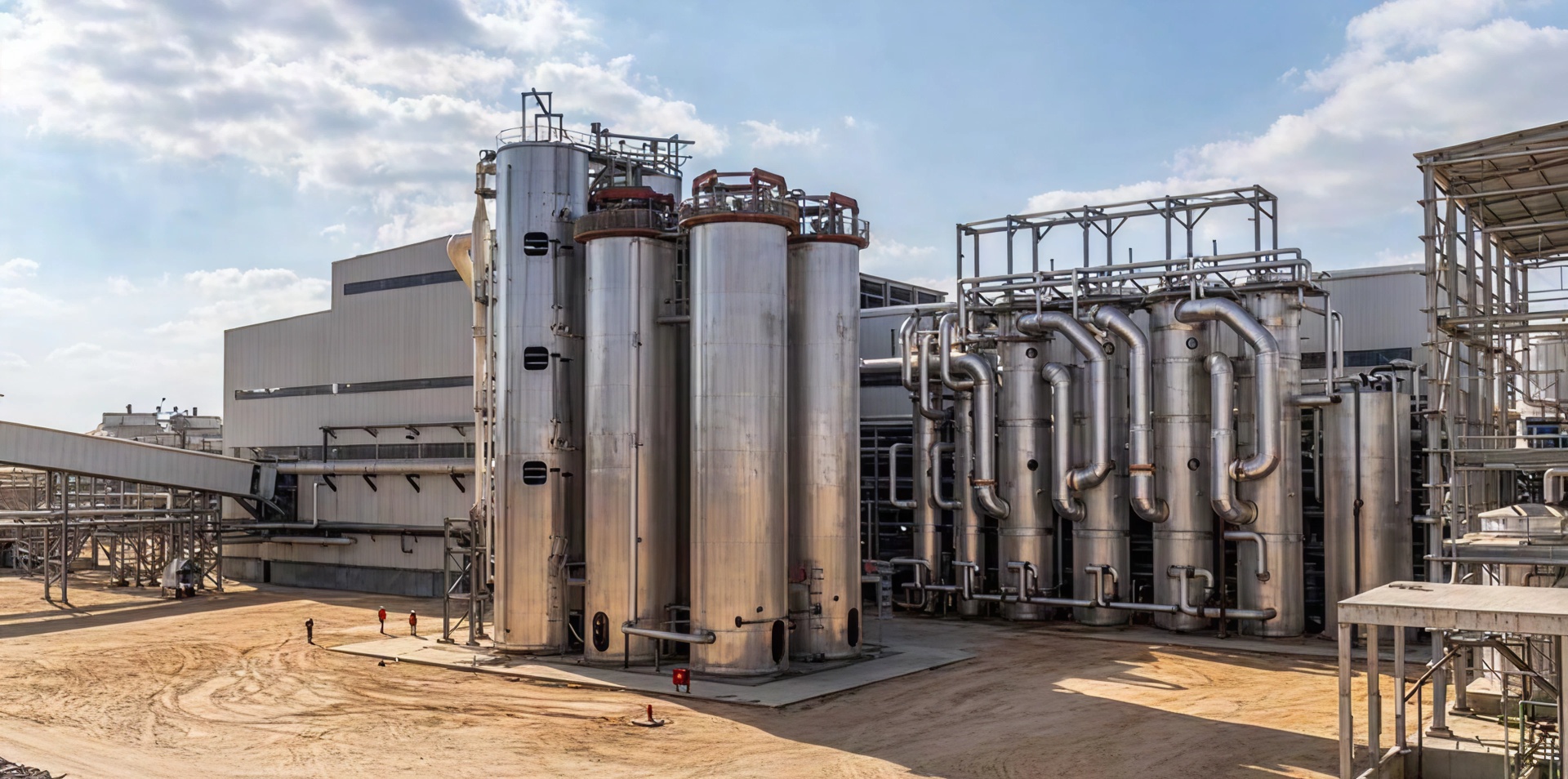


WVT: Fluidized-bed steam dryer


Highly effective: how a WVT from BMA works
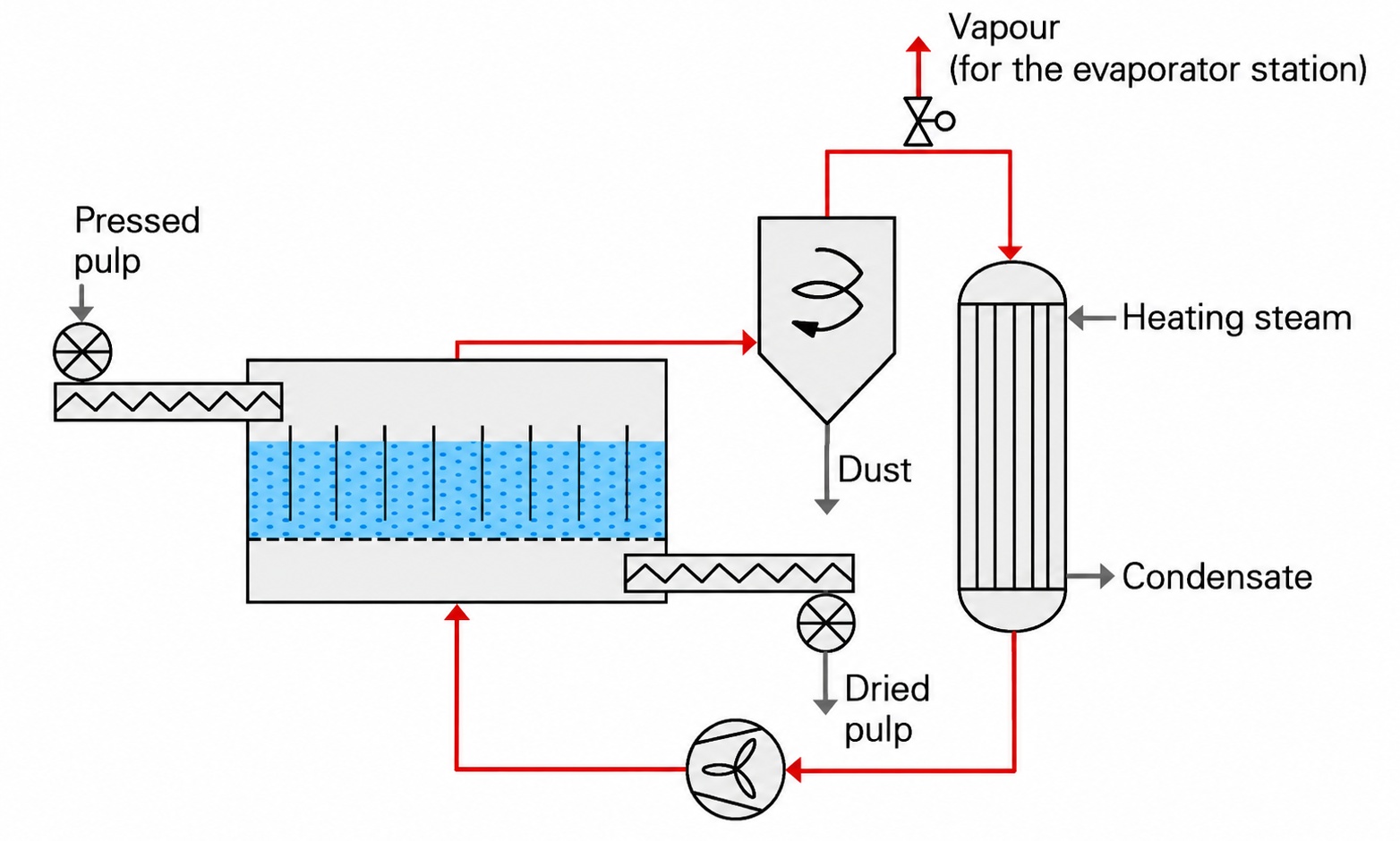
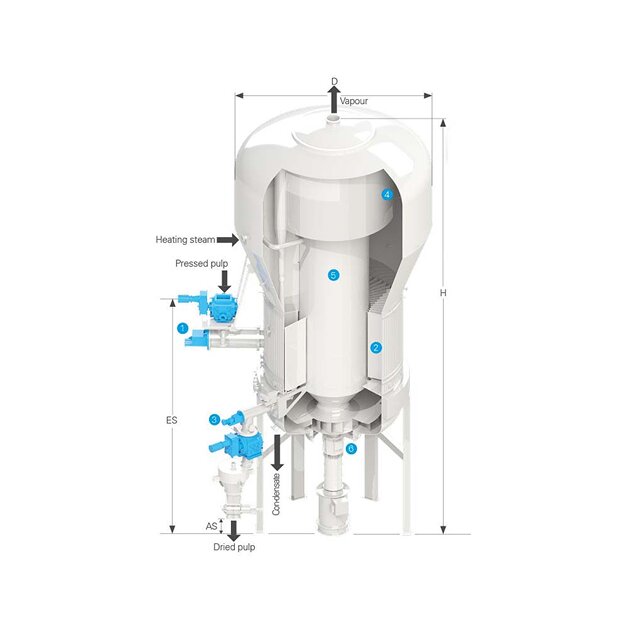
Input
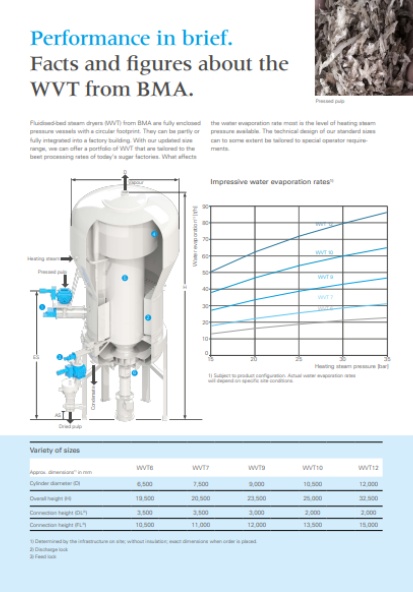
The product feed system introduces the pressed pulp into the first cells of the dryer, where the drying process begins under controlled conditions.
Cells and fluidised bed
The pressed pulp moves through several connected cells in a fluidised state. A centrally positioned heat exchanger supplies the heat required for evaporation while ensuring efficient and uniform drying.
Discharge
The final cell collects the dried pressed pulp together with dust from the rotary separator before both are discharged through a screw conveyor and lock into the expansion cyclone.
Dust separator
The dust separator removes dust particles from the circulating vapour. It is designed with inlet openings exclusively in the lower part for efficient separation.
Heat exchanger
Located at the centre of the dryer, the heat exchanger transfers heating steam energy to the fluidised bed, providing the heat required for water evaporation.
Fan
The fan, positioned below the heat exchanger, generates the circulation flow of steam, directing it upward through the distribution plate into the fluidised bed to maintain continuous drying.
* Dust separator with inlet openings exclusively in the lower part.
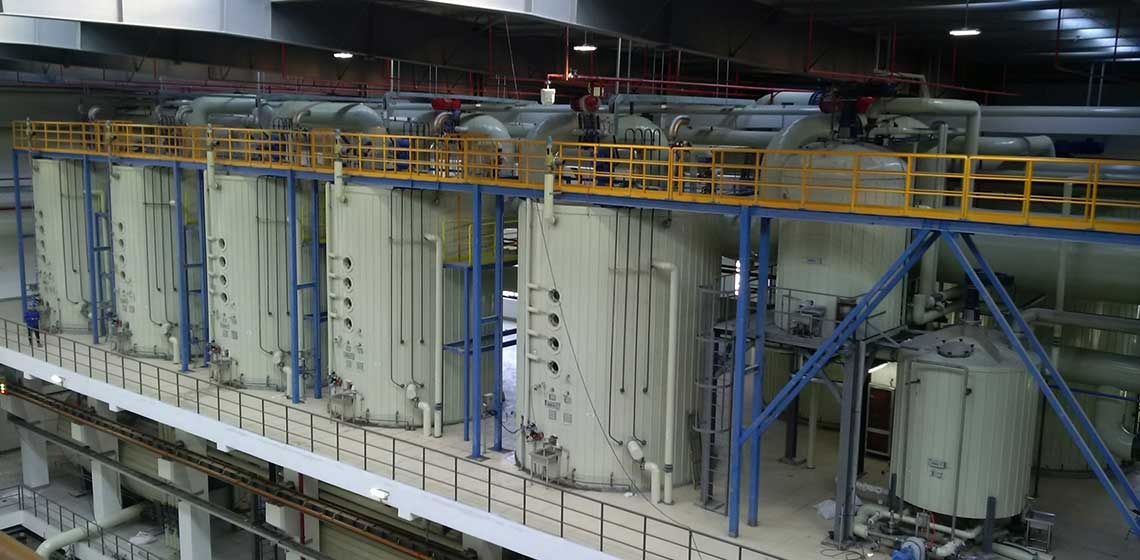
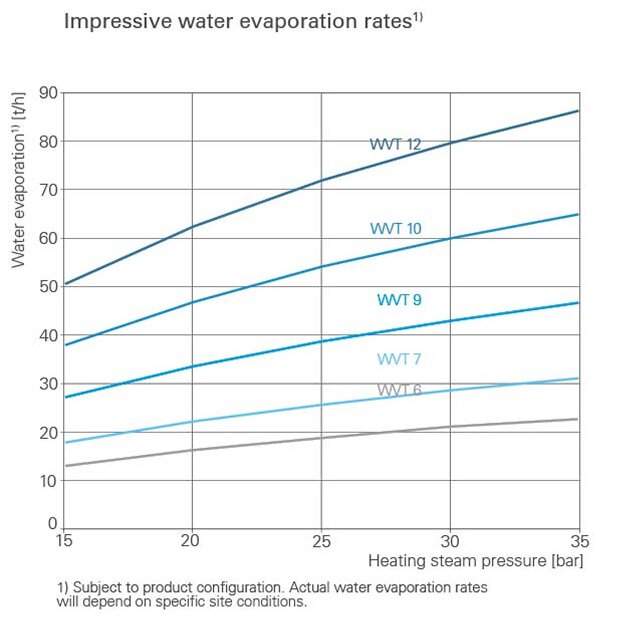
Fluidised-bed steam dryers (WVT) from BMA are fully enclosed pressure vessels with a circular footprint. They can be partly or fully integrated into a factory building. With our updated size range, we can offer a portfolio of WVT that are tailored to the beet processing rates of today’s sugar factories. What affects the water evaporation rate most is the level of heating steam pressure available. The technical design of our standard sizes can to some extent be tailored to special operator requirements.
Facts and figures about the WVT from BMA
| Variety of sizes | |||||
|---|---|---|---|---|---|
| Approx. dimensions 1) in mm | WVT6 | WVT7 | WVT9 | WVT10 | WVT12 |
| Cylinder diameter (D) | 6,500 | 7,500 | 9,000 | 10,500 | 12,000 |
| Overall height (H) | 19,500 | 20,500 | 23,500 | 25,000 | 32,500 |
| Connection height (DL) 2) | 3,500 | 3,500 | 3,000 | 2,000 | 2,000 |
| Connection height (FL) 3) | 10,500 | 11,000 | 12,000 | 13,500 | 15,000 |
The benefits at a glance

Process engineering benefits
- High fluidisation rates already in the first cell thanks to product conditioning (heating and segregation) before pulp enters the fluidised bed.

High availability and small footprint
- Plug protection sensory system and combined automation system to prevent blockages of the distribution plate.

High availability and small footprint
- Energy recovery through vapour use reduces the need for primary energy compared to conventional drying methods.
Downloads
Please refer to the product brochure for more detailed information. We would also be happy to advise you in a personal consultation.