







Extraction towers from BMA – a success story
BMA has been a pioneer in the sugar industry in many ways, such as with the development of extraction towers. In the mid-twentieth century, we were the first company who tried to process beet cossettes in continuous operation on an industrial scale. It was the starting point for a technology that is in use around the globe today.
The development of extraction towers was one of the most important chapters in the history of the beet sugar industry – and one of the hardest. First trials of continuously extracting sugar beet cossettes in a twin-column tower were conducted in 1939. Eight years later, BMA acquired a licence for building the plant. Not long afterwards, German sugar producer Pfeifer & Langen commissioned the first twin-column tower at their Ameln factory. It had a processing rate of 600 tons per day.
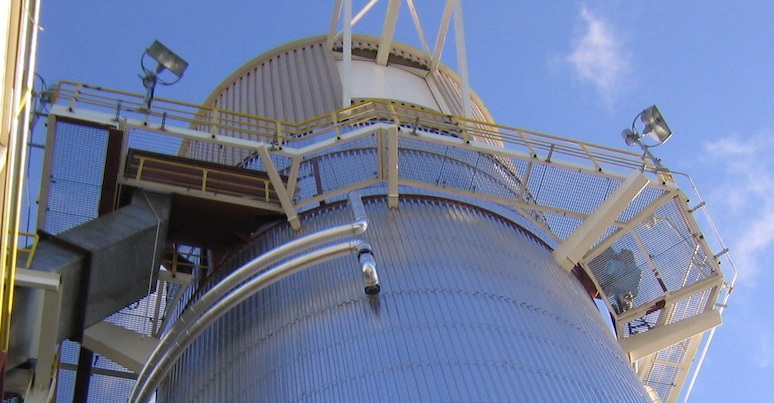
Single-column extraction tower for Elsdorf factory
The single-column extraction tower evolved from close collaboration with our customers. Pre-treated cossettes were moved downwards inside the shaft and distributed across the cross section of the tower. Pfeifer & Langen used the first tower of this kind at their Elsdorf factory, for processing 1,200 tons of beet a day.
Two years later, pumps were successfully used to move the cossettes into the lower section of the tower and an internal feed screw was no longer needed – the final breakthrough for tower extraction. Once more, the Elsdorf factory was the first to use the new technology.
From that point onwards, demand increased significantly. Customers deployed large numbers of our towers in beet-growing areas around the globe – from France, Britain and Italy, to Yugoslavia, the USSR and Czechoslovakia, and to the United States and Japan. By 1960, BMA had delivered 150 continuous extraction towers.
Less energy consumption, better plants
After cossette pumps were introduced, the system comprised a separator and a downstream cossette mixer, which was continuously improved. A state-of-the-art countercurrent cossette mixer produces a cossette/juice mixture that is suitable for pumping, with heat transfer between the cossettes and the juice. The result is cold raw juice, which is heated using vapour from crystallisation. With this primary energy saving and a defoamer cycle that includes partial-flow sterilisation, the system was further improved.
In collaboration with customers, BMA carried out additional fine-tuning into the 1990s. As the risk of contamination fell, capacity increased. A major step was the development of the Bogiflex/Fleflex tower drive. With this new drive, extraction towers could have diameters exceeding 7 m and daily processing rates of more than 5,000 tons.
The next level for processing rates
By 1991, BMA had built 344 extraction plants, both in Germany and abroad. That year, the Austrian Agrana Group commissioned the first extraction plant with a nominal beet processing rate of 10,000 tons per day at its Hohenau factory. That presented the opportunity of installing a single tower extraction plant in factories with processing rates of up to 12,000 tons per day.
And the development continued. The Tower 2000 system did away with the high-maintenance bottom screens and the large juice chambers below them. Instead, lateral screens were used, which permit far more effective juice discharge via flow-optimised channels. The entire screen section is made from stainless steel. Nordzucker tested this principle of operation in a converted extraction tower at its Klein Wanzleben sugar factory in Germany. The first full-size Tower 2000, with an 8.6 m diameter and designed for a beet processing capacity of 6,500 tons per day, was installed at the Szerencs sugar factory in Hungary in 1998.
Special material for a development boost
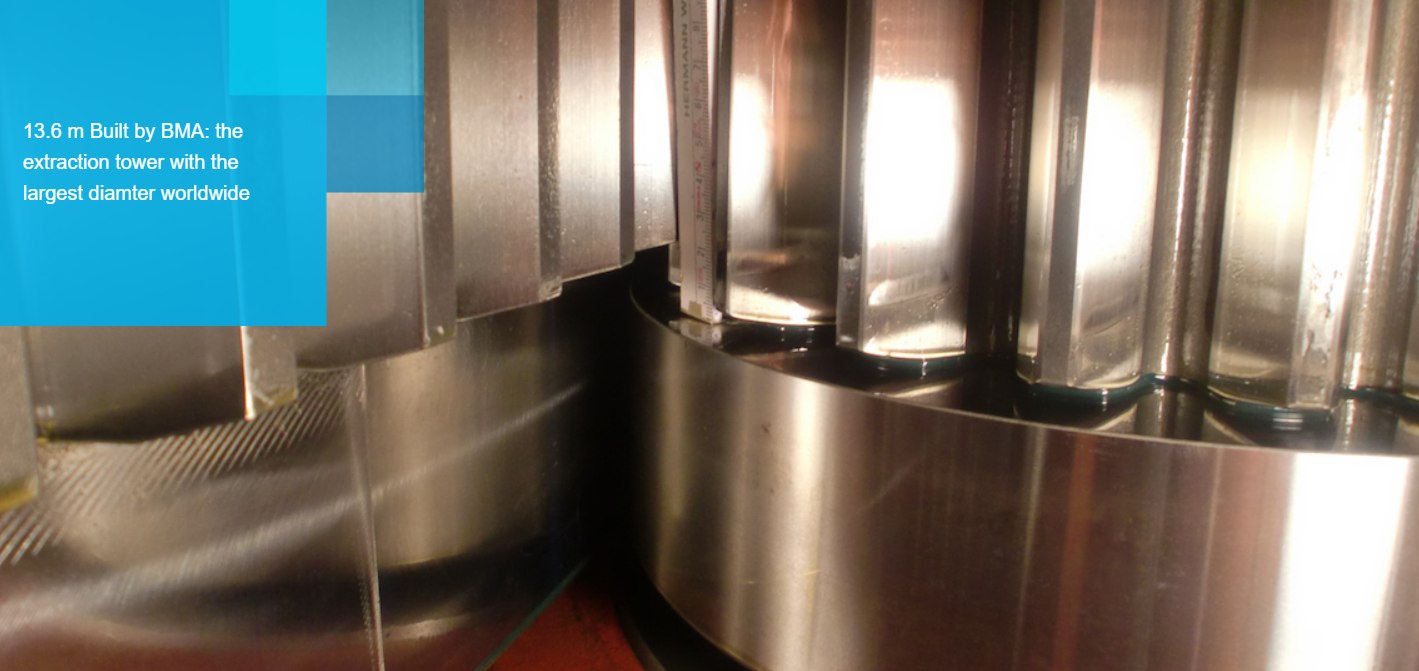
A new drive based on the Bogiflex/Fleflex tower drive marked the next evolutionary stage. The use of cutting-edge planetary gears helped save costs, but particularly the segmented bull gear made from a special material marked a significant step ahead. It made transportation of drive components to distant, sometimes remote factories far easier, and considerably simplified assembly. The drive had its debut in 2003, at Schweizer Zucker AG’s Frauenfeld plant.
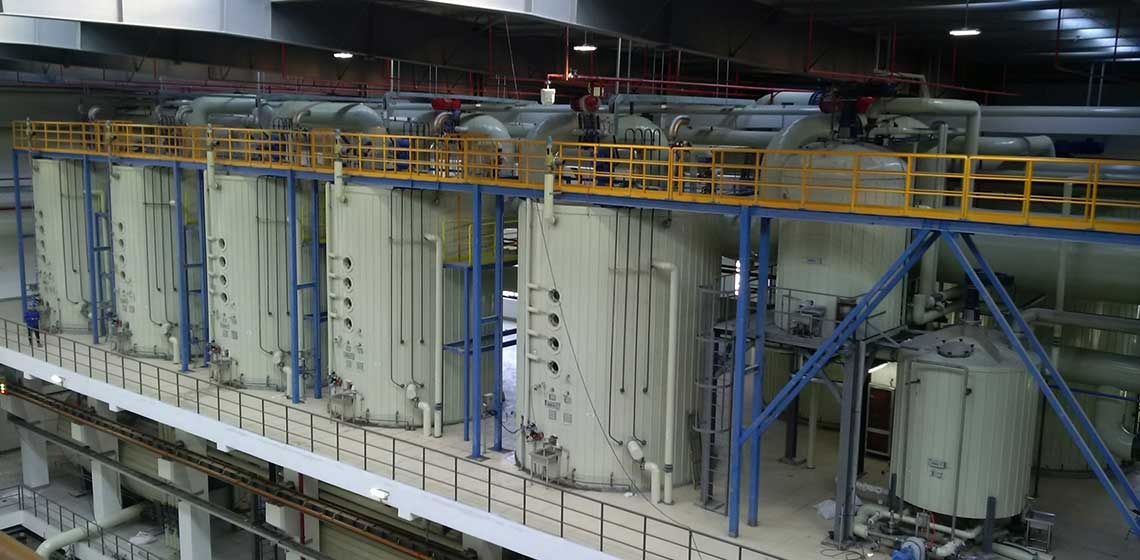
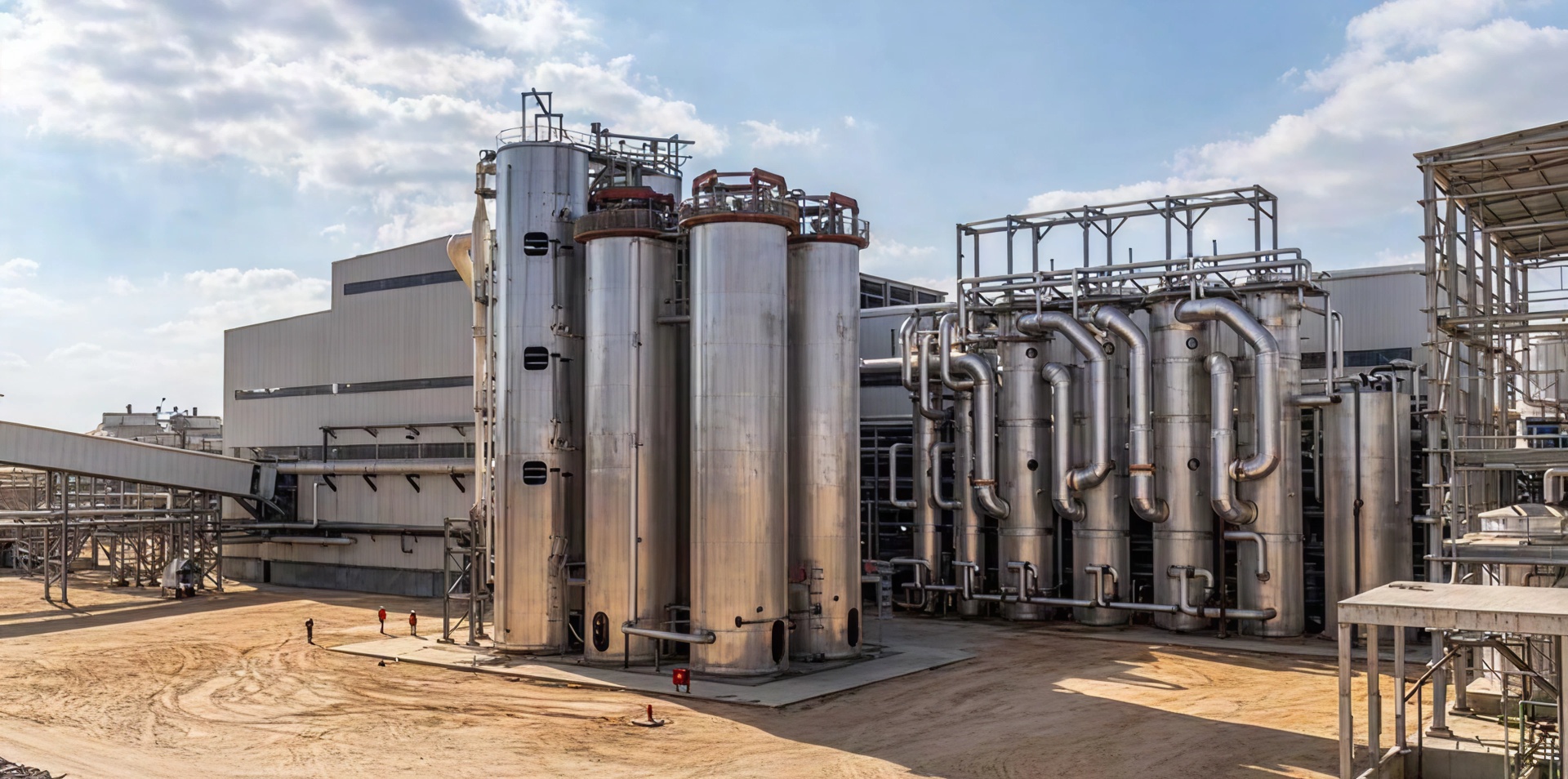
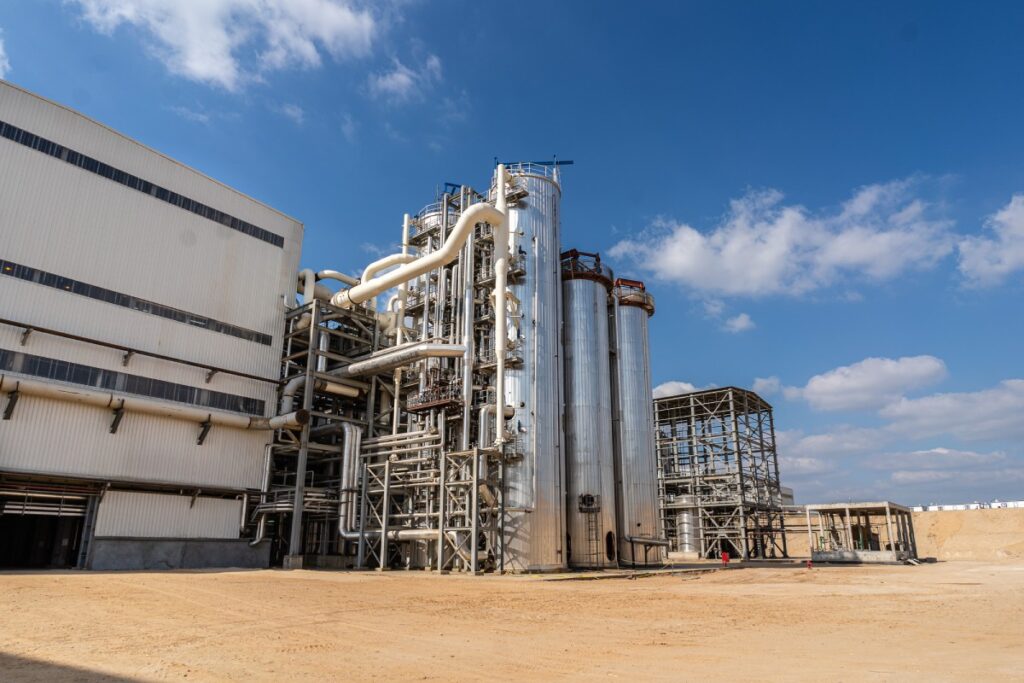
As factories grew in height, so did extraction towers. In addition to increasing processing rates, technologies also set new standards in energy and cost efficiency. Last year, the world’s largest extraction tower was installed at the Al Nouran sugar factory in Egypt, its external diameter a breathtaking 13.6 metres. The greatest challenge was the manufacture of equipment components that would be suitable for transportation and assembly.
Success in hot and cold climates
At present, 33 beet-producing countries rely on extraction plants from BMA. And since our towers can be found in many countries around the globe, with beet campaigns at different times of the year,
plants from BMA are in operation 24/7/365!
Thanks to our experience, they run just as well in northern beet-growing areas such as Finland, Canada or Russia as in southern regions, in Morocco or Egypt. Extraction plants from BMA can process frozen beets in the United States just as well as beets with a high dry substance content from countries across Africa.